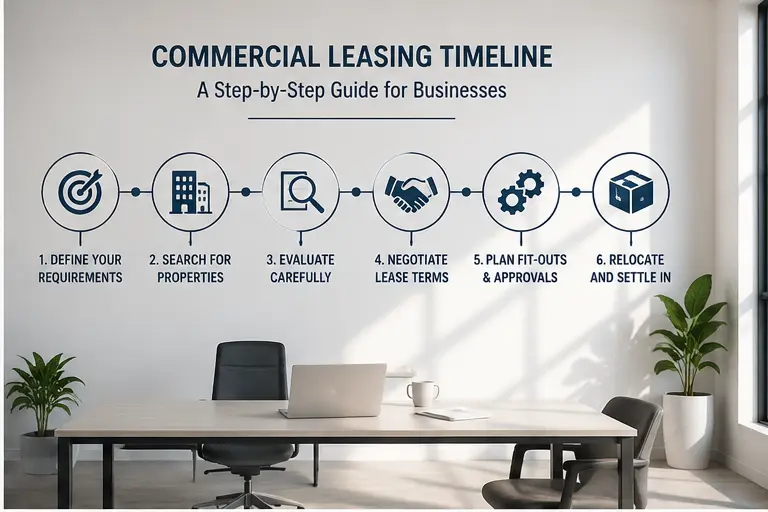
Choosing a commercial space in Singapore based solely on a low PSF rate could seem appealing, but it is often a costly mistake when hidden technicalities are taken into account. Commercial property leasing in Singapore typically takes 4 to 6 months from your initial property search to actual move-in day.
This provides ample time to identify suitable properties, negotiate lease terms, complete workspace planning, coordinate with contractors, and manage the relocation without unnecessary pressure.
If you’re a small business owner looking to expand or planning your first lease, that timeline probably feels like a mix of relief and dread.
Even though there’s a timeline to follow, a first-time tenant can easily get lost among contracts, clauses, and commitments most business owners have never had to negotiate before.
This guide walks through the 3 questions every small business asks when they start navigating Singapore’s commercial leasing market.
This is perhaps the most common mistake, but starting the search of property too close to your move-in date compresses every stage of the process.
The actual cost of a delayed property search is rarely just the inconvenience of a rushed move to a new property.
It can mean losing out on negotiated tenant improvement (TI) allowances and, more importantly, losing the future negotiating leverage you would otherwise have when choosing a property.
A few things tend to go wrong when businesses leave it late:
Commercial leasing in Singapore is far more complex and isn’t like renting a residential property where you can just view a unit, sign a form, and move in within days.
It involves negotiated terms, legal clauses that protect or expose both parties, and often layers of approval from landlords, agents, and sometimes URA zoning requirements too.
You might face problems such as incomplete infrastructure, the need for temporary swing space, or delayed move-ins, which can impact your project budget and create a great deal of real and measurable cost for the business.
4 to 6 months is the ideal time for your business to make the transition well ahead of the ideal move-in date, where you’ll have enough room to search properly, negotiate from a position of strength, and get your tenancy agreement reviewed without rushing.
These 6 stages can be broadly applied across different sectors, and the importance of each stage can vary depending on the requirements of individual businesses and the tenant’s financial and occupational needs.
This first step covers two things happening for your business side by side. First is figuring out exactly what your business needs, and second is finding the right unit according to your business’s requirements.
These requirements can differ significantly depending on the sector and the type of business.
For example, companies looking for Grade A offices, particularly those seeking prime ESG-compliant office spaces, may require significant lead time.
In a tightly contested Grade A market, tenants with a longer runway are often in a stronger position to negotiate better commercial terms than those competing for the same space under time pressure.
Similarly, R&D businesses may have a fundamentally different timeline because of their technical requirements.
For industrial and logistics businesses with the rise of automation-heavy manufacturing, power infrastructure can be another major consideration.
Mechanical, electrical, and plumbing (MEP) requirements, floor-load upgrades, and stringent regulatory approvals can extend both the search and fit-out phases well beyond a standard office benchmark.
For these businesses, space planning, design, and renovation requirements should be considered much earlier in the process, rather than only after a property has been selected.
Before you browse a single listing, get clear on:
Once your requirements are clear, the search for commercial and office space for rent in Singapore can begin with confidence.
With the help of an experienced agent, this stage seems less daunting with volumes of listings and more what fits your business’s requirements.
At this point, your property agent should be filtering options based on:
They also help you find off-market listing units that never make it to the public listings, which are often far better value than anything visible on the usual property sites, because most of it depends on negotiation with landlords.
That’s one of the clearest advantages of working with a reliable agency that already has landlord relationships in place.
Once you’ve gone through the listings, you shouldn’t rush at this stage. A good agent points out a few things that most tenants wouldn’t think to check, based on your business’s requirements.
If your business has ESG reporting obligations, particularly if you have a multinational parent company or investors watching sustainability commitments closely, leasing in a Green Mark certified building is fast becoming a checklist item rather than a nice to have.
This standard usually comes with a rental premium, so it’s a trade-off your agent should help you weigh against your budget and reporting needs.
At this point, you should also compare your total occupancy cost, not just your headline rent, since service charges, utilities, and reinstatement obligations can vary quite a bit between units that look almost identical on paper.
When you have selected the right property from the listings, the next stage is to understand and negotiate the commercial lease terms before committing to the premises.
Once you’ve picked the unit, your agent submits a letter of intent, commonly called an LOI, to the landlord, which begins the real negotiation.
The LOI submitted would typically include:
Landlords often present standard terms as fixed when, in reality, several points are negotiable, especially in a softer rental market, where your agent can help you navigate.
Once the LOI is accepted, the landlord’s lawyer drafts a formal Tenancy Agreement, or TA. It’s a far more detailed document than the LOI, and this is usually where small business owners start to feel out of their depth.
Before signing, businesses should carefully review and confirm the agreed lease terms, including the rental rate, lease period, security deposit, and any rent-free fit-out period offered by the landlord.
The security deposit is typically equivalent to 2 to 3 months’ rent, depending on the lease terms.
Once the TA is signed, the lease must be stamped with IRAS (Inland Revenue Authority of Singapore) within 14 days, where applicable.
Pay close attention to:
It is also important to check whether the new premises require any location-specific licenses or approvals.
This can be particularly relevant for F&B businesses and certain professional services, where the use of the premises may be subject to specific requirements.
This is also where professional guidance can be particularly valuable. Experienced commercial property advisors, such as The Address Co, understand the existing market conditions and landlord expectations, which can help businesses negotiate terms and strategies that an individual tenant may not encounter regularly.
Commercial leasing should always be viewed as a long-term business partnership rather than a simple property transaction.
One overlooked clause here can cost tens of thousands of dollars down the line. The right partner will take time to negotiate and review the TA, flag anything unusual, and push back where terms aren’t standard.
Once both sides are satisfied with the TA, it’s time to finalize. This stage involves:
Once the lease has been signed, the focus then shifts to preparing the space for daily operations.
During the agreed fit-out period, businesses can take hold of the unit to complete any renovation or furniture installation depending on the business requirements before fully moving in.
Multiple contractors may need to work alongside one another, while landlord approvals and authority permits may also need to be managed at the same time.
Planning these requirements early helps ensure that the workspace is ready for operations by the intended move-in date and reduces the risk of delays or unexpected costs.
Few things need to be taken care of before you can consider the process complete.
If required, conduct a final inspection of the premises and document everything in writing so that both parties can sign off on an inventory list, with each side keeping a copy for their own records.
During the first week, arrange for utilities to be registered under the business’s name, set up the internet connection, and complete any remaining operational requirements.
Once the handover is complete, and the final inspection is clear, you get the keys and officially move in.
Understanding the timeline and the stages only gets you halfway there. The real question businesses should be asking is how to come out of this process with a lease that actually works in their favor, not just one that got signed on schedule.
The honest answer comes down to one thing, i.e., having an experienced commercial property agent in your corner from day one.
Here’s why that relationship matters more than most business owners expect:
Instead of finding themselves back at square one, businesses that build a genuine, ongoing relationship with their agent tend to move through each subsequent lease faster and with better terms, simply because their advisor already understands how they operate.
That’s really the strategy. Not just finding a space for rent, but finding a partner who knows the commercial and legal landscape in Singapore well enough to protect you at every stage, from your very first search to your next renewal.
We guide businesses through every stage of leasing commercial office space, from their first property search to their next renewal.
© 2026 The Address Co Singapore. All rights reserved.

 addressco.sg@gmail.com