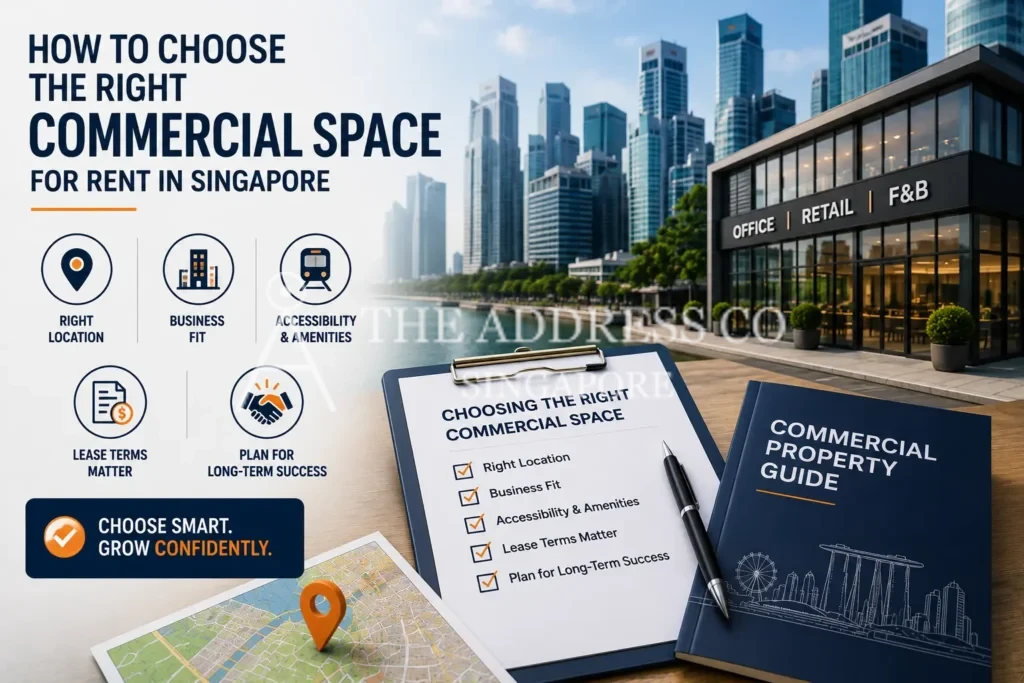
When you rent commercial office space in Singapore, you need to consider things such as zoning, location for the specific business type, building grade, total occupancy cost, and lease terms before making any final choice.
But before you can get into any of those things, you need to know exactly what to look for, and that starts with first understanding your business requirement. You can easily get sidetracked by choosing anything with a low base or PSF rate on paper, but a lot of things can add up in the end, costing the business a lot more than expected.
So here are six things you need to consider before you sign a lease for any property.
The first thing you need to know is whether the property type and the URA zoning are suitable for your business type or not. Not every commercial property is approved for every type of business, and if you’re starting out for the first time, this might not be something you’re aware of.
Singapore’s Urban Redevelopment Authority, or URA, has a set of permitted use restrictions for commercial buildings, where the premises you’re looking at may need to match the type of business you intend to operate from there.
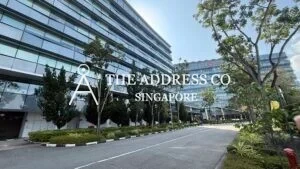
Broadly, office tenants are choosing between a few different categories.
So before you shortlist any of the preferred locations from property listings, you need to confirm with your agent first and check whether the unit is approved for your business and actually matches your requirements.
What counts as the right location depends entirely on what your business actually does. Location affects more than just the commute, and it’s one part of the search where a business can easily fall short if it doesn’t think this through properly.
When comparing commercial and office space for rent in Singapore, you should weigh:
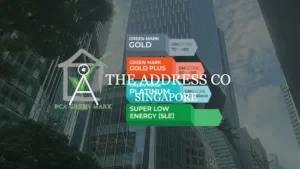
Building standards will show up in your day-to-day operating costs. Grade A buildings, for example, typically offer better lift systems, higher floor-to-ceiling heights, and stronger building management, often paired with BCA Green Mark certification, Singapore’s national green building rating that signals lower energy and water consumption. A premise with a better building grade often costs more upfront but saves you in the long run.
If your business has ESG reporting obligations, this certification is increasingly a requirement, and it’s worth knowing that Green Mark buildings in the CBD have been commanding rents up to 12% higher than non-certified properties, so that premium is worth weighing against your budget.
The rent per square foot, or PSF, is only part of the whole picture. CBD Grade A office rents in 2026 sit at around SGD 12 per square foot on average, a 17-year high, with prime addresses like Raffles Place running SGD 11 to 15 psf and fringe areas like Tanjong Pagar closer to SGD 9 to 13 psf.
But the real number to budget for is total occupancy cost.
That includes:
Any two premises advertised at a similar headline rent can end up costing very differently once you factor in exactly what you’re getting out of it.
Once you’ve negotiated terms with the landlord, a formal Tenancy Agreement, or TA, has to be signed before the lease is officially made. A few things need particular attention:
Fit-out planning should start around this time too, before signing. Confirm what existing fixtures you’re permitted to keep or must remove, building rules around renovation hours and contractor access, and fire safety or licensing requirements specific to your industry.
On the actual move-in day, a few formalities still need to be followed before the keys are handed over for you to carry on with your business.
Looking at listings based on rent alone, as discussed, isn’t the only thing that matters. Navigating everything on your own is possible, but having an agent who specializes in the commercial property market in Singapore, someone who knows the market well enough to flag any non-standard terms or negotiate with landlords on your behalf, tends to save far more than their fee costs.
We guide businesses through every stage of leasing commercial office space, from their first property search to their next renewal.
© 2026 The Address Co Singapore. All rights reserved.

 addressco.sg@gmail.com